
Clean-air escape · Diwali week 2026
Delhi’s Air Has a Lid. Mussoorie Lives Above It.
Written by The Wimpy’s Wrath·8 min read·Updated 9 November 2026
On Diwali night, 8 November, 20 of Delhi’s 59 monitoring stations crossed 400, the ‘severe’ mark. The city woke up on Monday to a thick grey haze and an AQI of 370, with DTU and Burari at 437. GRAP Stage III curbs have been in place since 6 November, the youngest classes are on hybrid, and air purifiers are running in living rooms across the city.
Everyone has a theory about whose fault it is. Crackers. Farm fires. Traffic. The truth is a bit more interesting, and it has a lot to do with the shape of the land and the weather. It also explains why, a few hours north, the same morning looks completely different from a ridge in Suwakholi.
Same Monday evening, two different skies
Here is the fine dust you breathe in, PM2.5, in a single cubic metre of air. Every dot is 5 micrograms.
Average of 31 stations. Unhealthy.
Satellite-based estimate. Moderate.
What the World Health Organization calls safe for a day.
Readings from IQAir on the evening of 9 November 2026. India’s AQI and the US-style AQI on apps like IQAir use different scales, so we compare the raw PM2.5 numbers instead. India’s own 24-hour PM2.5 standard is 60 µg/m³.
That’s roughly four times more fine particles in Delhi’s air than on the hill, on the same evening, and that’s after the worst of Diwali night had thinned out. Mussoorie wasn’t spotless. It’s a moderate reading, not a perfect one. But one is a city under a dome and the other is a ridge above it.
The dome over Delhi
You were right to call it a dome. Here’s what’s actually happening above your head on a November night.
← swipe to see the whole picture →
It’s not just the crackers
In late October, IITM’s new lab in Delhi started publishing a daily split of where the city’s PM2.5 comes from. Here’s what it showed for 20–24 October, just before the festive week.
Secondary particles
Gases from exhausts, farms, power plants and factories that react in the air and turn into fine particles. The biggest slice, and the hardest to pin on one culprit.
Vehicles
Exhaust, plus brake and tyre wear, from millions of trips a day. The steadiest source in the city.
Burning, all kinds
Seven burning categories added together: garbage, wood and coal fires for cooking and warmth, crop residue and more.
Crop stubble, on its own
The most unpredictable slice. The MoES forecast put it near 22% for 5 November. Two days later it was 1.7%. It rises and falls with fire counts and wind direction.
Firecrackers
One loud night, dropped into air that had already been ‘very poor’ for a week. On Diwali night 2026, 20 of Delhi’s 59 stations crossed ‘severe’.
Dust and construction
Roads, building sites and bare ground. Not in these daily numbers, but never really off.
Shares: IITM daily source estimates for Delhi’s PM2.5, 20–24 October 2026, as reported by Hindustan Times. Categories overlap, so they don’t add up to 100%. Stubble shares for 2–7 November: Ministry of Earth Sciences’ Decision Support System (the 4 and 5 November figures were forecasts).
The weather is the multiplier. The same traffic and the same fires produce a clear-ish day in March and a grey, eye-stinging one in November, because in November the lid is on.
Three things people get wrong
It’s all the farm fires in Punjab and Haryana.Tap or hover to flip
Some days they matter a lot: the MoES forecast put stubble near 22% of Delhi’s PM2.5 on 5 November. By 7 November it was 1.7%. Even on its worst days, about four-fifths of the smoke came from everything else.
Ban the crackers and the smog goes away.Tap or hover to flip
Delhi’s air was ‘very poor’ for a full week before Diwali. Crackers add a spike to air the weather has already trapped, and the morning after Diwali has been worse in eight of the last nine years (Down To Earth).
Mountains always have perfect air.Tap or hover to flip
Not always. Hill towns get haze, traffic and smoke too. Height and wind help a lot, so check a live reading and go high, not just far.
Why the hills breathe easier
Mussoorie and Suwakholi sit around 2,000 metres up. Delhi’s winter lid sits a few hundred metres above the city. That gap is most of the story.
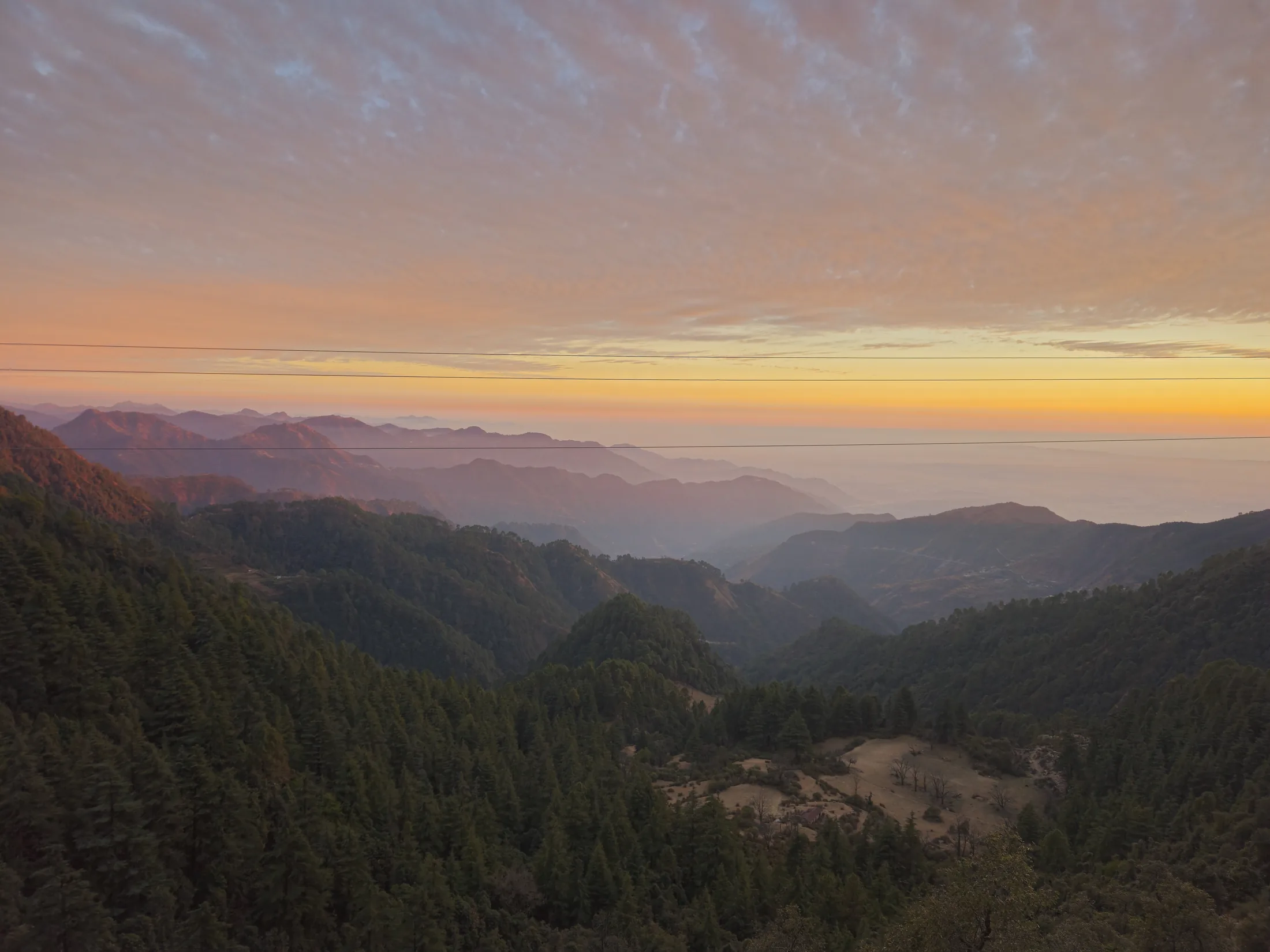
Hills aren’t magic. Mussoorie read ‘moderate’ on 9 November, not ‘good’. Long-weekend traffic, wood smoke and the Doon Valley’s own haze can push it up. So check a live AQI map before you drive, go high rather than just far, and pick a stay away from the busiest roads.
A two-night clean-air reset
Smog at breakfast, sunset by five
Where to stay while your lungs recover
Highlanders Café & Stay is in Suwakholi on the Dhanaulti Road, about 20 minutes past Mussoorie. Villas, cottages and rooms, a café downstairs, and windows you’ll want to keep open. Pets are welcome too.
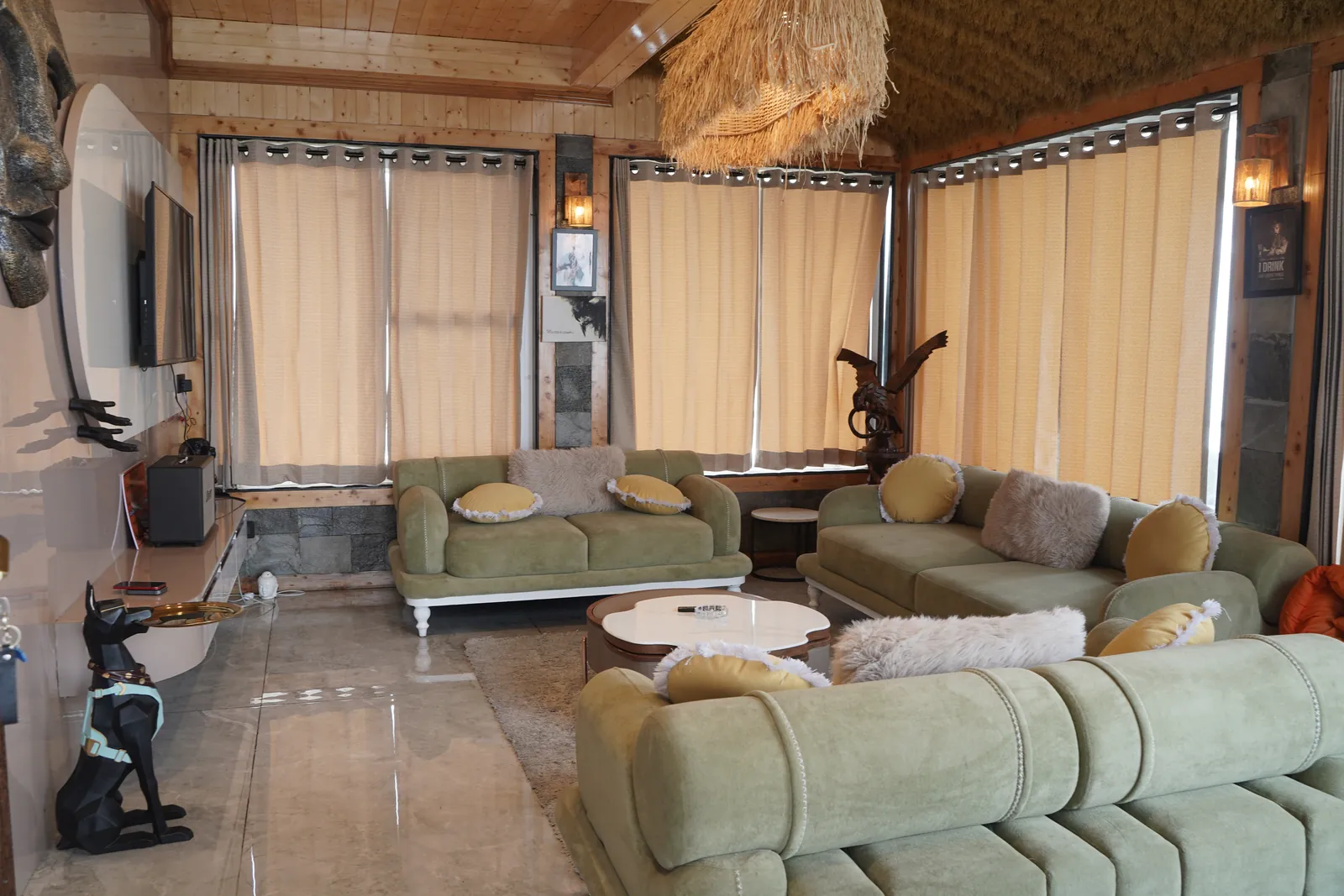
The Kings Land
Room to spread out after the drive, three washrooms, and a living room made for long, slow breakfasts.
See this stay →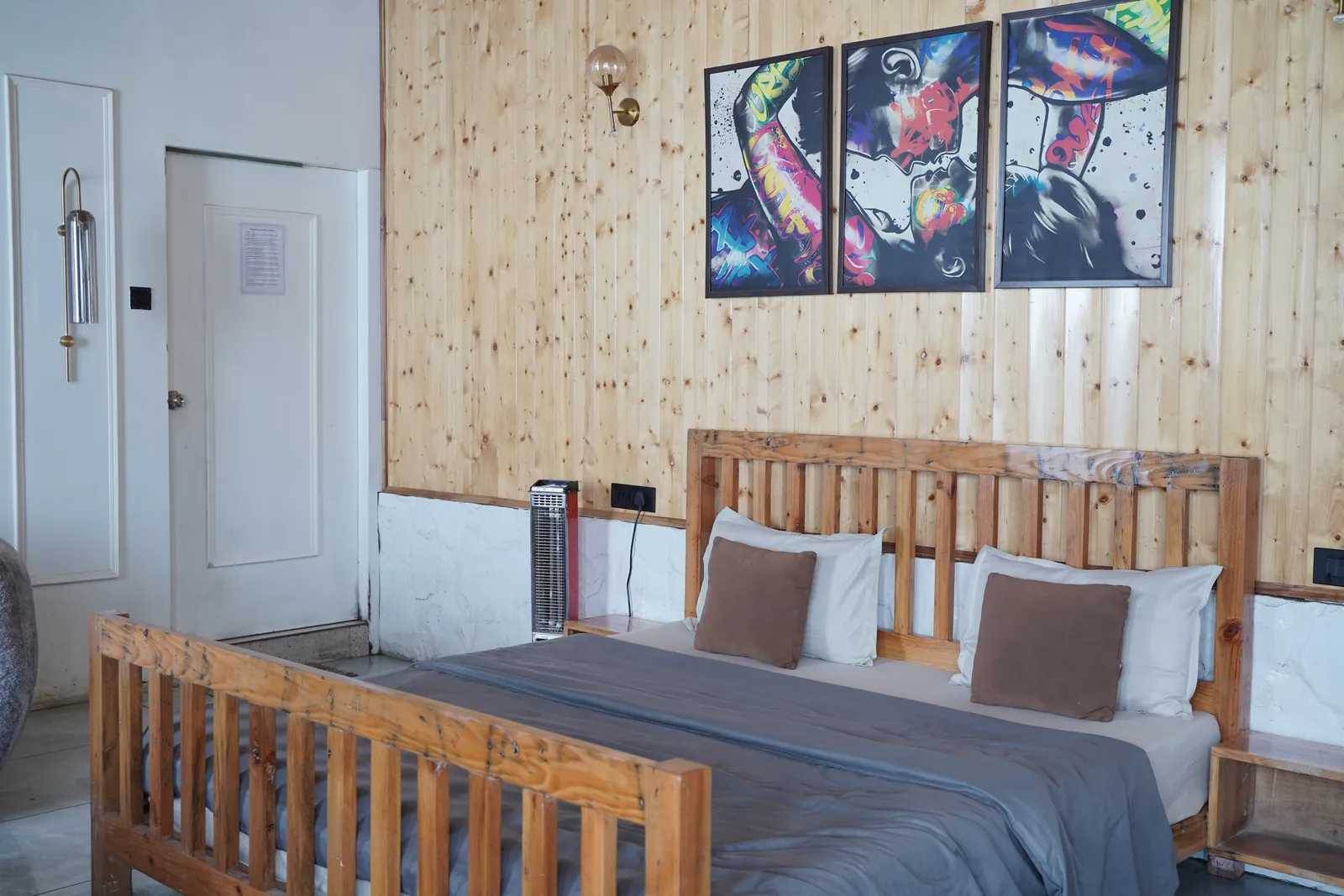
Endless Sunset
Warm wood, a bathtub for cold evenings, and big windows you will actually want to open.
See this stay →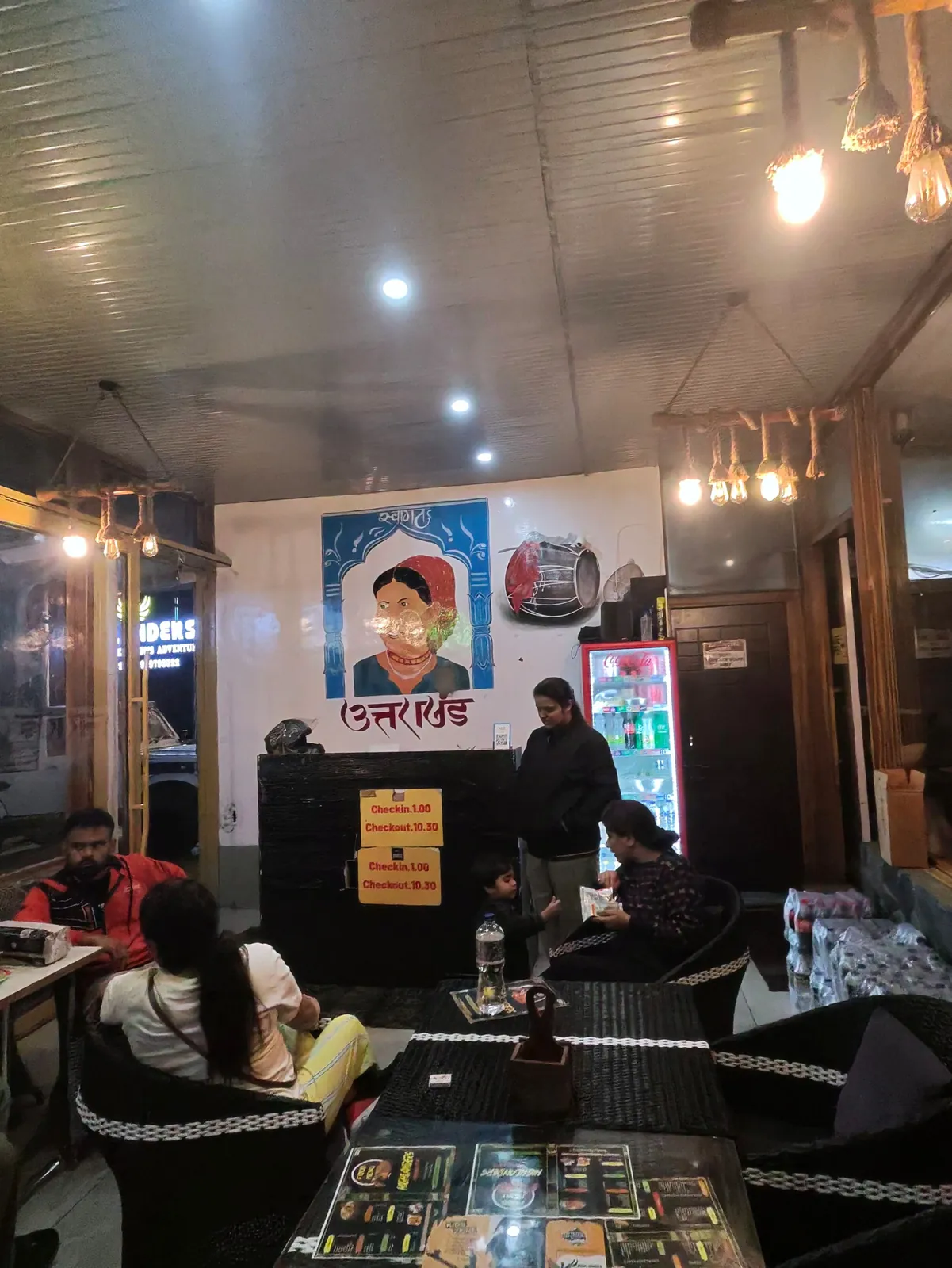
Highlanders Café
Two floors and 60+ seats of Continental, Italian and Chinese food. Open 7 am to 10 pm, chai included.
See this stay →Also up here:Highlanders Cottage, with 2 bathtubsScenic 1BHK VillaMountain View Cozy RoomDeluxe RoomsSemi-Deluxe Rooms
Good. Now use them.
Clear November afternoons are made for High Fly Adventure, our sister park right next door in Suwakholi. A 600 m zipline over the valley, a giant swing and more than 25 activities. Scream as loud as you like. The air can take it.
Before you drive up
- Check both ends. Look at a live AQI map for Delhi and for Mussoorie the night before. It helps you pick the cleanest window.
- Leave early. You’ll beat the traffic, and the last hill hour is better done in daylight. The sun sets around 5:20 pm.
- Mask for the city stretch. A well-fitted N95 and the car on recirculation until you’re out of the NCR.
- Travelling with kids, older parents or asthma? Carry their medicines, and pack warm layers for the cold mornings up here.
- Packing for it? Our November packing list for Mussoorie has the full checklist.
Quick answers
Why is Delhi’s air so bad in November?
Is stubble burning the main cause of Delhi’s pollution?
Is the air in Mussoorie really cleaner than Delhi?
How long does it take to drive from Delhi to Mussoorie now?
Where is Highlanders Café & Stay?
Can I bring my dog to escape the smog too?
Swap the purifier for a ridge.
Tell us your dates and we’ll keep the chai hot. Villas, cottages and rooms in Suwakholi, 20 minutes past Mussoorie.
WhatsApp usExplore our stays